
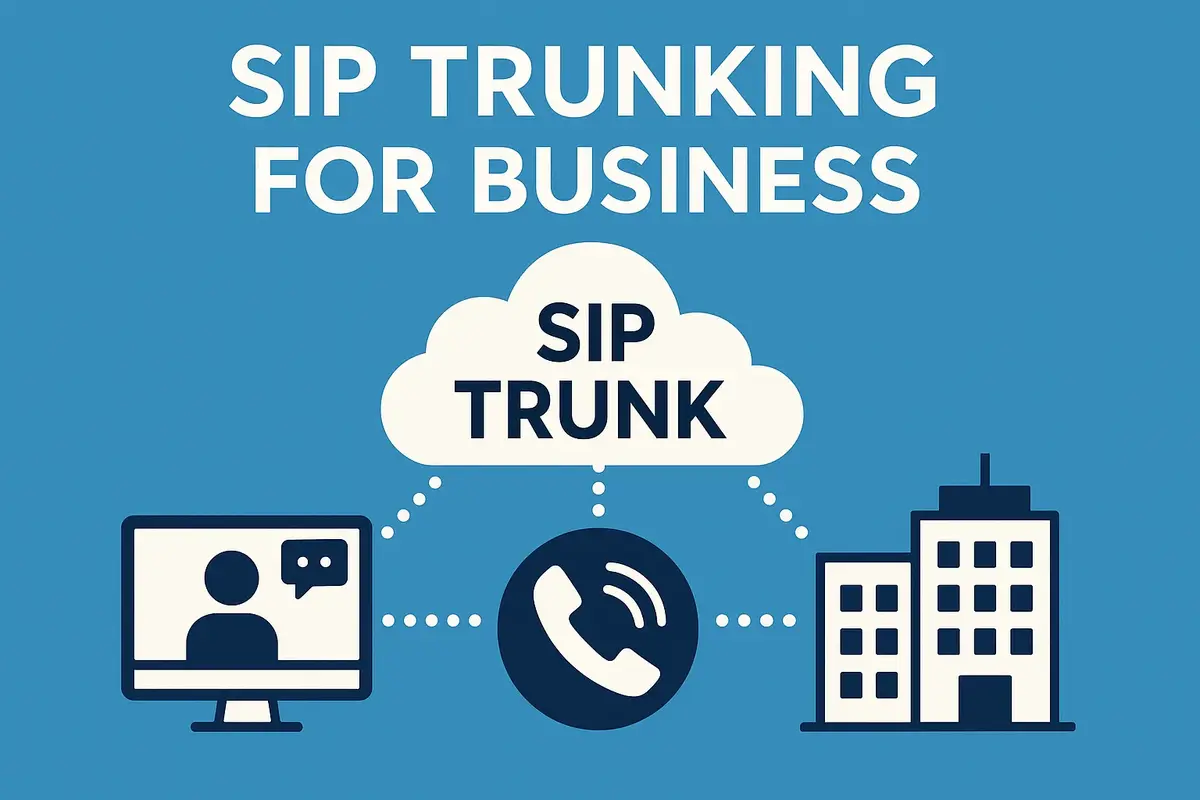
SIP Trunking for Business: Cutting Costs and Boosting Communication Efficiency
When phone lines limit your growth, sip trunk unlocks new potential. SIP trunking is the solution for the evolving needs of modern businesses, which require scalable, secure, and cost-effective communication tools. That is how businesses in the new era minimize telecom expenditures, concentrate activities, and reach consumers worldwide based on the same digital backbone.
From Legacy to Digital: How SIP Trunking Modernizes Business Telephony
SIP trunking is a modern method that replaces outdated physical phone lines. It connects your business PBX (Private Branch Exchange) and the world telephone network using VoIP (Voice over Internet Protocol) technology. The effect: a flexibility and thus traceability of voice communication that is no longer locked to local hardware.
Instead of installing multiple lines for each employee or office, companies route all calls through a single IP-based channel. This reduces complexity and provides complete control over call flows, security, and scalability.
Real Savings: Why SIP Trunking Reduces Telecom Costs by Up to 50%
The financial case is clear. When a business adopts SIP trunking, it typically reduces its monthly phone bills by 30-50%. International calls are channeled digitally, bypassing long-distance charges.
There’s also no need for expensive hardware maintenance or separate systems per location. Telecom spending is predictable and scaled to meet business requirements, offering centralized billing, simplified upgrades, and pay-as-you-grow models.
Instant Scaling: How SIP Trunks Support Business Expansion and Remote Teams
Communication systems must adapt as businesses expand. SIP trunking is size-flexible, allowing you to create or delete channels with no need for physical installations or service interruptions.
Launching new branches? Expanding remote teams? Supporting a global workforce? SIP trunking makes it seamless. Voice services adjust in real time, without costly infrastructure delays.
Technical Setup: What You Need to Deploy SIP Trunking Securely
Deploying SIP trunking is straightforward, but there are key components to consider:
- A SIP-compatible PBX system (on-premise or cloud)
- High-speed internet with sufficient bandwidth for call volume
- Network security protocols to protect voice traffic
- Configuration for QoS (Quality of Service) to ensure call clarity
With the right setup, your business gains a reliable voice infrastructure that’s fully future-proof.
How to Select a SIP Provider That Matches Your Business Growth Plans
Look beyond pricing. The right provider supports your long-term growth and development. Evaluate:
- Global number coverage and direct access to Tier-1 networks
- System compatibility with your existing PBX
- Voice quality, uptime guarantees, and fraud protection
- 24/7 support and real-time monitoring tools
- Flexible plans that scale with your usage
DID Global offers enterprise-grade sip trunk solutions that connect your business across borders with reliable quality, fast deployment, and full control from a single platform.
Source: DID Global